The Emotions of Genres
Video Credits: Clips from John Summit Concert, Edited in Capcut
What makes a concert worht it?
A few weeks ago, I went to a John Summit concert at a stadium—and I absolutely loved the experience. The crowd was on fire, every drop felt like it hit ten times harder than it does through headphones, and I left feeling buzzy and alive. I’m the kind of person who gets post-concert depression, rewatching videos weeks later just to relive the moment. That high-energy, communal feeling you can only get at a live show made me realize something: even in the age of streaming, concerts still hold a unique emotional power.
But while I’m admittedly biased, I wanted to know if other people felt the same. With rising ticket prices, massive world tours, and an increasingly digital music world, I felt this topic really merited a poll—not just to satisfy my curiosity, but to see whether live music still holds an important place in people’s lives.
So, I ran a short survey with a sample of 9 participants, asking about their concert habits, motivations, and deal-breakers. Here’s what I found.
1. Most people are still going to concerts.
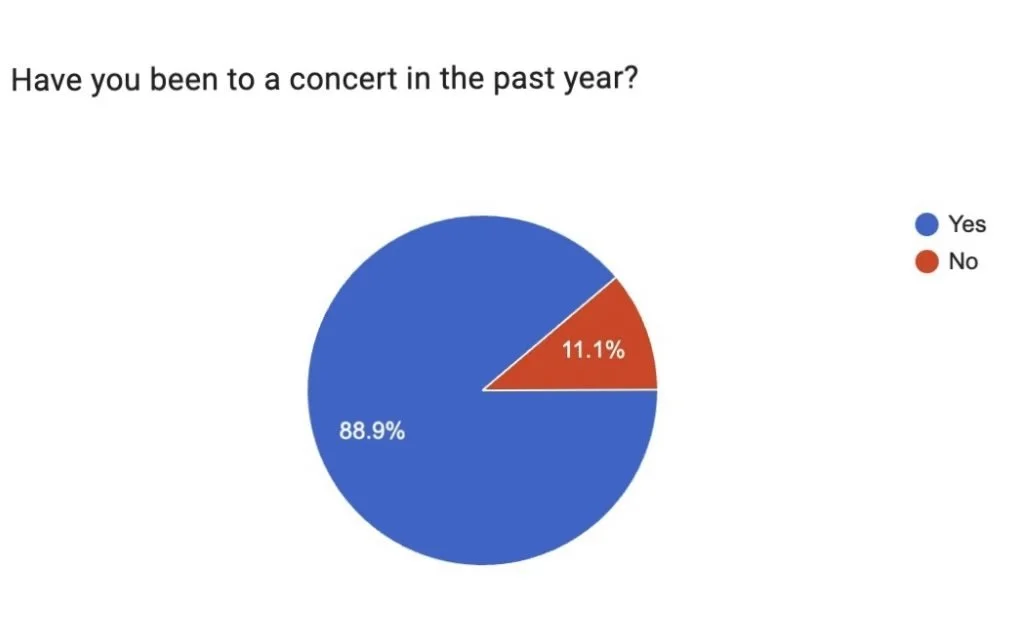
88.9% said they’ve been to a concert in the past year—much higher than I expected given how often people complain about ticket prices. Only 11.1% hadn’t gone at all.
This confirmed something I suspected: even if concerts are getting harder to afford, people still prioritize them emotionally.
2. Arena Shows and Festivals Dominate.
When asked what type of concerts they attend:
44.4% chose arena or stadium shows
33.3% chose music festivals
22.2% preferred small local venues
Given the current trend of massive global tours and festival culture, these numbers weren’t surprising. What was surprising is how few people favored intimate local venues.
3. The Concert Experience Matters—but not for Everyone.
When asked how important the live experience is compared to recorded music:
22.2% said very important
22.2% said somewhat important
22.2% were neutral
33.3% said not important
This was unexpected. I assumed most people valued concerts more highly. The split suggests that live music is deeply meaningful to some, but optional to others, possibly depending on personality, budget, or how strongly they connect to music.
4. The biggest barrier was unanimous.
100% of respondents selected pricing as the main reason they don’t attend concerts.
This was the least surprising finding. In an era of $300 tickets, dynamic pricing, and instant sellouts, affordability is the number one roadblock. It reinforces just how essential equitable access and ethical ticketing are to the future of live music.
5. Sound quality was the top-rated factor.
Participants rated which aspects enhanced their concert experience most (out of 5):
Sound quality/audio mixing: 4.78
Artist’s live performance/energy: 4.44
Setlist/song selection: 4.44
Crowd atmosphere: 4.33
Stage production/visuals: 4.1
This result surprised me— I thought stage production (especially after going to John Summit) would rank higher. Instead, people prioritized something more fundamental: hearing the music well. It shows that no amount of lasers or pyrotechnics can fix muddy audio or bad mixing.
Did the Results Surprise Me?
Yes and no.
I expected pricing to be a barrier and for people to still attend concerts despite it. But I genuinely thought more people would say the live experience was “very important,” especially in a post-pandemic world where we once lost the ability to gather at concerts.
What really stood out is how much people value sound quality over spectacle—something that aligns with musicians' and producers’ priorities more than with mainstream assumptions about concerts being just “big shows.”
Overall, the poll confirmed that concerts still matter emotionally, socially, and musically—but only when the experience feels worth the cost.
Why This Topic Matters
Concerts are more than entertainment. They're rituals, communal emotional experiences, cultural touchpoints, and—based on my own John Summit experience—transformative moments that stay with you. But they’re also becoming less financially accessible.
Understanding what audiences value most helps frame bigger questions:
What makes a concert “worth it”?
What should artists invest in most?
How can the industry adapt to rising prices without losing fans?
This poll doesn’t answer everything, but it highlights exactly why the future of live music deserves attention.
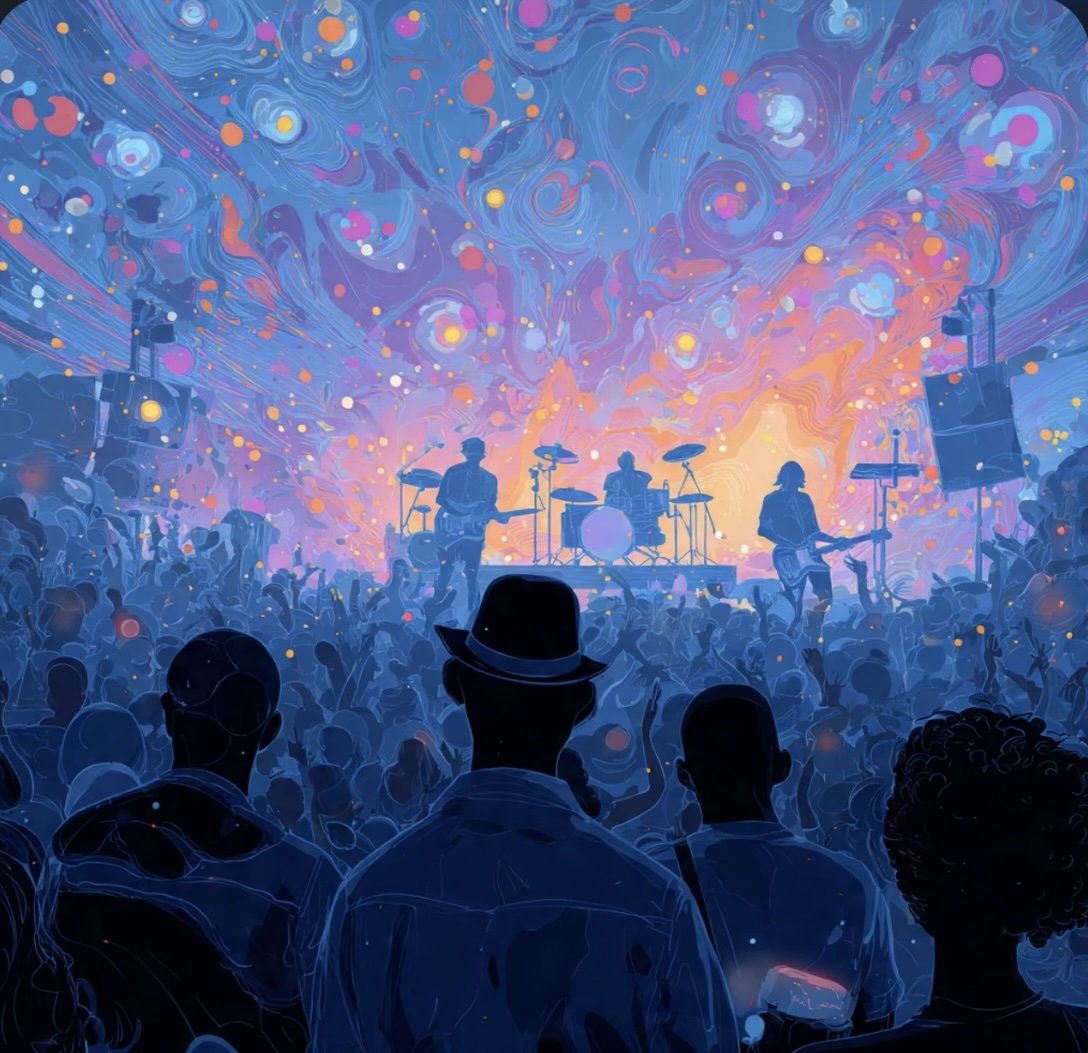
“Generate a digitally drawn photo of a concert, one that feels magical and surreal”. MetaAI, 22 Oct. 2025, https://www.meta.ai/
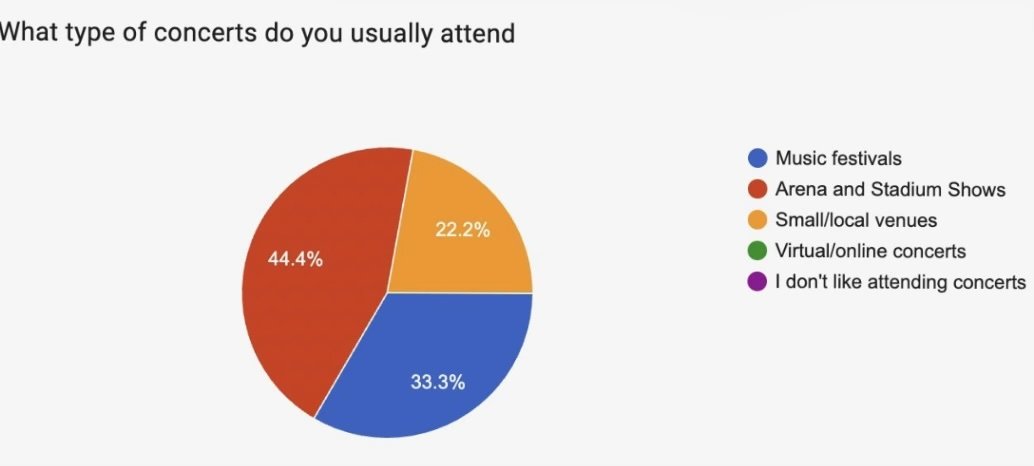
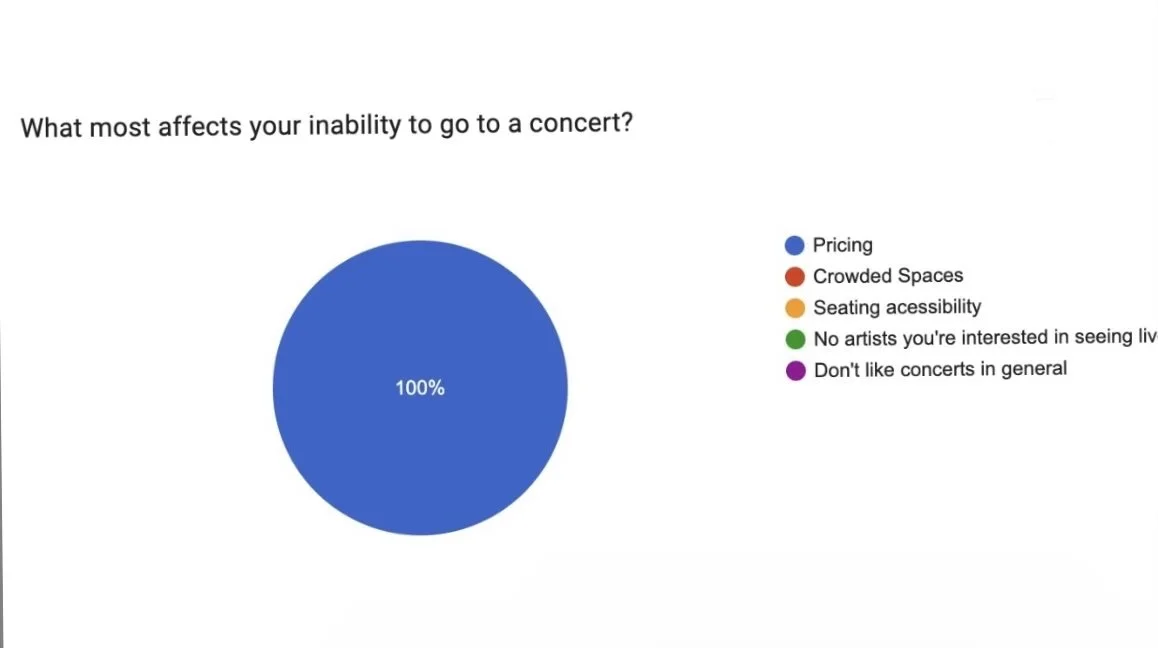
Photos from My Google Form Survey